


By the time Norah O’Donnell opened the 10 p.m. ET hour on CBS on Tuesday night, she was simply saying out loud what every big board was already showing: “It looks like a blue wave.” Democrats won back both chambers of Congress in the midterm elections, flipping seven Senate seats and 33 House seats, and television had its own story: who covered it best, and how many people watched.
The first Nielsen numbers tell that story plainly. In preliminary figures, NBC News averaged 6.8 million viewers in primetime, well ahead of ABC News with 5.12 million and CBS News with 2.73 million, and NBC led in both key demographics, 2.93 million adults ages 25 to 54 and 2.46 million adults ages 18 to 49. The cable race ended in a virtual three-way tie, with MS NOW finishing first in primetime by the narrowest of margins at 4.19 million, followed by CNN at 4.18 million and Fox News at 4.08 million. The win was a milestone for NBC: its first midterm election night victory in total viewers in 24 years, and a sharp turnaround from 2022, when it ran fourth with 3.1 million viewers, less than half of Tuesday’s draw. Those are Nielsen’s preliminary panel figures, as reported by TheWrap.
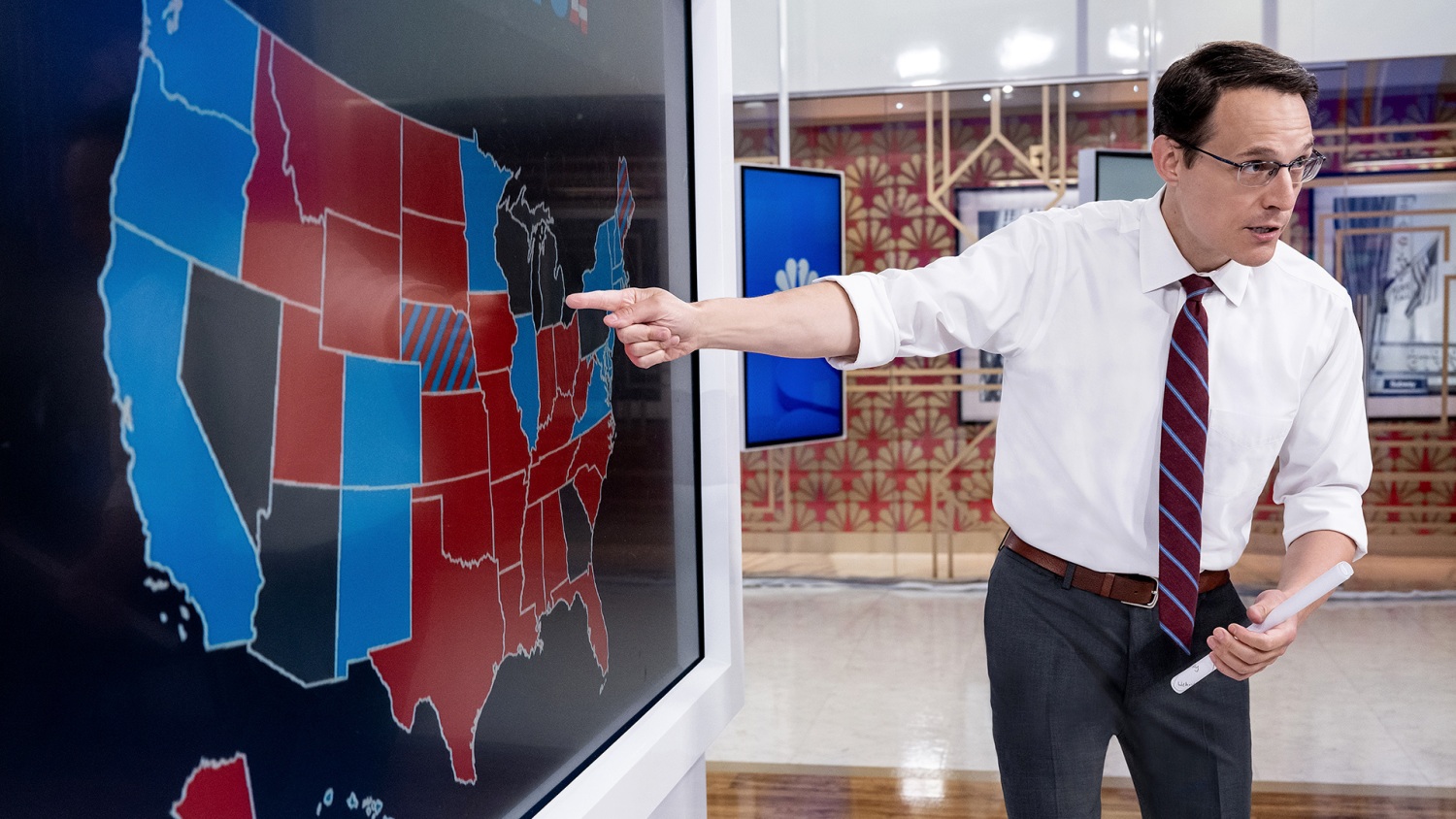
The night’s breakout star was not sitting at an anchor desk. Steve Kornacki, NBC’s chief data analyst, spent the evening at his Big Board while a dedicated Kornacki Cam livestream, running from 5:30 p.m. ET, let viewers watch him work the numbers in real time. It finished as the No. 1 election livestream on YouTube, drawing 29 million views across platforms, 6.1 million of them on YouTube, according to NBC. Kornacki finally signed off at 3:26 a.m. ET, nearly 10 hours after the stream began, and explained on X the next morning that he had planned to go 13 hours before the night caught up with him.
Tuesday was also a debut of a different kind for MS NOW, covering its first election night as a standalone network after the Comcast split. Rachel Maddow told viewers “that celebration can absolutely begin” once Democratic control of Congress was called, and Jen Psaki reported that Senator Susan Collins had conceded her Maine race before the networks had called it. The network had its most-viewed day ever on YouTube, 33.2 million views, ahead of CNN at 18.5 million and Fox News at 16.2 million, and it followed with a second night of coverage built around a Maddow-led special, We the People.
By the network’s own accounting of those preliminary Nielsen figures, shared by its parent company, Versant, the debut set records. MS NOW ranked No. 1 across all of cable on an election day for the first time in the network’s history, its full-day average of 2.14 million total viewers edging Fox News at 2.13 million and CNN at 1.8 million, up 32 percent from 2022. During the We The People special, which ran from 6 p.m. to 2 a.m. ET, it also ranked No. 1 with 3.52 million viewers, ahead of CNN at 3.24 million and Fox News at 2.98 million, also up 32 percent from 2022. On YouTube, MS NOW ranked as the No. 1 news organization on the platform for the day, drawing two and a half times the views of ABC News, CBS News and NBC News combined. Maddow, who led the coverage, called the House flip “a seismic change in Washington.”
Deadline’s walkthrough of the coverage captured how fast the night moved. NewsNation, working with Decision Desk HQ, was the first network to call the House for Democrats, at 9:11 p.m. ET. On CNN, Dana Bash marked the moment the Senate flipped at 11:35 p.m. ET: “This is absolutely monumental.” The results kept delivering headlines, Texas among them, where James Talarico won his Senate race by double digits. The night’s strangest subplot played out in public, as Donald Trump live-posted his anger at Fox News, furious at the network for platforming Democrats and blasting its polling, while Fox’s own commentators debated the losses on air. One former television news executive summed up the mood at the network as a “Fox funeral.”
One caution: these are preliminary Nielsen numbers. The final figures typically land later in the week, and while NBC’s win is not in doubt, the order in that near-tie among the cable networks could still shift slightly.