

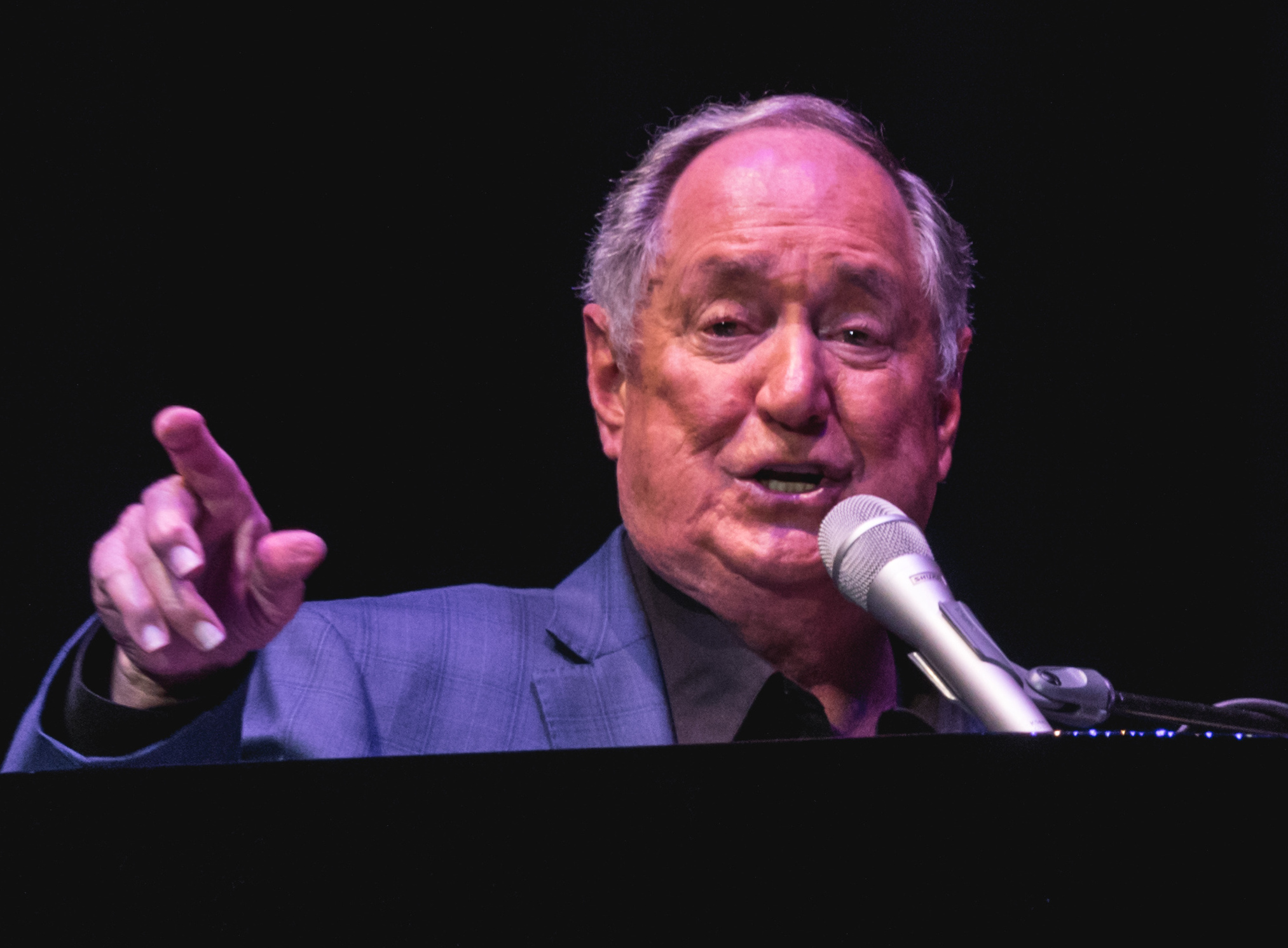
Neil Sedaka, the Brooklyn-born singer, songwriter, and pianist whose melodies became the soundtrack of multiple American generations, died Friday in Los Angeles. He was 86. Paramedics transported him to a local hospital after a medical emergency at approximately 8 a.m. local time, and his death was confirmed shortly after by his representatives. A cause of death was not disclosed. His family released a statement saying: “Our family is devastated by the sudden passing of our beloved husband, father and grandfather, Neil Sedaka. A true rock and roll legend, an inspiration to millions, but most importantly, at least to those of us who were lucky enough to know him, an incredible human being who will be deeply missed.”
To understand what the world lost today, you have to start not with the hits, but with the piano. Born and raised in Brooklyn, Sedaka’s early proficiency at the instrument earned him a spot at the famed Juilliard School of Music, where he attended both prep school and college. It was an unusual double life: classical training by day, early rock and roll by night. That tension between discipline and spontaneity would define everything he ever wrote. At the age of 13, a neighbor heard him playing piano and introduced him to her son, Howard Greenfield, who was three years older. The partnership that followed would prove to be one of the most fruitful in the history of American popular music.
Alongside Greenfield, Sedaka set up shop at the famous Brill Building and helped define the pop style that emerged from the New York City hit factory. Their success with songs like “Stupid Cupid” for Connie Francis helped Sedaka secure a record deal of his own. What came next was a run of singles that, heard today, still sound impossibly fresh: “Oh! Carol,” written for a high school girlfriend named Carole King; “Calendar Girl”; “Happy Birthday Sweet Sixteen”; and “Breaking Up Is Hard to Do,” which reached number one on the Billboard Hot 100 in 1962 and became one of the defining pop recordings of its era. He scored three No. 1 hits on the Billboard Hot 100 and nine in the Top 10, primarily during his peak years in the early 1960s.
Then came the British Invasion, and the world changed. Rather than fight the tide, Sedaka pivoted to pure songwriting, quietly supplying hits to artists ranging from Frank Sinatra and Elvis Presley to Tom Jones and the Fifth Dimension. It was the kind of professional resilience that most artists never find, and yet it still wasn’t his most remarkable comeback. That came in the mid-1970s, when an unlikely patron gave Sedaka’s recording career a second life. Elton John, who had become one of the biggest stars on the planet, championed Sedaka and performed with him on the 1975 No. 1 hit “Bad Blood.” “Laughter in the Rain” also hit the top spot that same year, making Sedaka one of the very few artists in pop history to achieve number one singles across two entirely separate decades.
His pen reached even further than most fans knew. Sedaka and lyricist Phil Cody were enlisted to write English lyrics for a new Swedish quartet calling themselves Björn & Benny, Agnetha & Anni-Frid. The song became “Ring Ring,” a major hit in Europe and the first of many smashes for the group that was quickly rechristened ABBA. He also wrote “Love Will Keep Us Together,” which became a massive hit for Captain & Tennille, and “(Is This the Way to) Amarillo” for Tony Christie, a song that would find a new global audience decades after Sedaka first put it on paper.
In recent years, Sedaka found yet another audience, this one scrolling through TikTok. In January 2025, he shared a video of himself sitting at the piano with his then-19-year-old grandson, Mike, performing a duet of “Breaking Up Is Hard to Do.” The clip sparked thousands of comments from fans who could not stop gushing over the wholesome pairing, with many sharing nostalgic memories of growing up with Sedaka’s songs. A follow-up video of the two performing his 1961 ballad “I Must Be Dreaming” racked up nearly 400,000 likes, and the pair were soon invited to perform the duet live on Good Day New York. “Michael has a big future,” Sedaka said proudly at the end of one post. “And I should know.” It was a remarkable coda to a remarkable career: a legend in his eighties, sitting at the same instrument he had mastered as a child in Brooklyn, introducing his music to a generation that hadn’t even been born when he first made the charts, with his grandson beside him.
Sedaka was inducted into the Songwriters Hall of Fame in 1983 and received a star on the Hollywood Walk of Fame. He was nominated for five Grammy Awards over the course of his career. In a 2020 interview, he reflected on the secret to his extraordinary longevity in the industry. “I think the reason I’ve been around so long is I’ve always been able to raise the bar, reinvent Neil Sedaka, and to develop and grow,” he said. “It’s still very gratifying to hear my music played on the radio. The songs will outlive me.”
He was right. The songs will outlive him. They already have.