

“A Smile and a Ribbon” has officially slipped back into the cultural bloodstream, not as a dusty 1950s curiosity, but as the eerie, sugar-sweet heartbeat of the horror prequel series IT: Welcome to Derry. Its massive resurgence feels less like a traditional comeback and more like a ghost returning in a new form, driven by its chilling use as the opening theme for the series on HBO Max. In the mid-1950s, this track by the sister duo Patience and Prudence was the kind of song you might imagine floating out of a corner jukebox: gentle harmonies, a lilting melody, and the simple promise that a smile and a pretty ribbon were all a girl needed to face the world. It belonged to the era of soda fountains and letterman jackets, selling an image of effortless happiness that has now been permanently twisted into a warning for a new generation of horror fans.
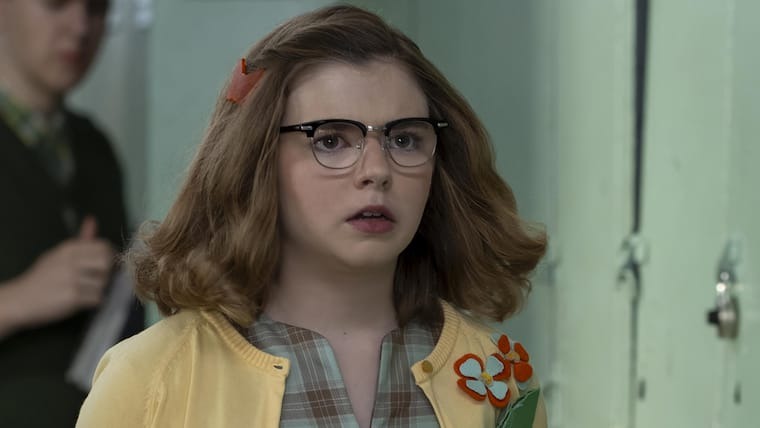
The shift from nostalgia to nightmare is the backbone of the series, which takes us back to 1962 to explore the origins of the curse in Derry, Maine. By pairing the song’s hopeful lyrics—“a smile on my face and a ribbon in my hair”—with unsettling imagery of the town’s dark history, the show creates a mask for the evil lurking beneath the surface. This theme of “enforced cheerfulness” is anchored by the standout performance of Matilda Lawler, whose career we have followed closely on Trevor Decker News. Lawler plays Margaret “Marge” Truman, a character who embodies the song’s message of performing happiness while something unspeakable festers. In a massive reveal that has sent shockwaves through the fandom, it is discovered that Marge Truman is actually the future Marge Tozier—the mother of the legendary Richie Tozier from the original IT films.
Lawler’s performance brings a tragic depth to the character, especially in her harrowing confrontations with Pennywise, where the monster reveals he can see her entire future. The connection to the song is profound; the “toothy grin” mentioned in the lyrics becomes a metaphor for the defensive humor and forced smiles Marge uses to survive the horrors of her youth—a trait she seemingly passes down to her son, Richie. For younger listeners discovering the track through the show, it has become a horror motif disguised as a lullaby, where every gentle note carries an undercurrent of dread because of its association with the generational trauma of the Tozier family.
The viral status of the song was cemented as it moved from HBO Max screens to TikTok and Reels, where creators have embraced the “aesthetic horror” of the track. Fans are now cutting the sweet harmonies over footage of empty playgrounds, rain-soaked sidewalks, and red balloons, highlighting the unsettling contrast between the music and the visuals. Streaming platforms have even begun grouping the 1956 original with the series score, making it a staple for anyone looking to dive back into the atmosphere of Derry. This reinterpretation proves that even the most innocent melody can become a haunting omen when paired with the right story. Today, “A Smile and a Ribbon” stands as a perfect example of how a series can pull a forgotten piece of history into the modern day and give it a terrifying new legacy.