

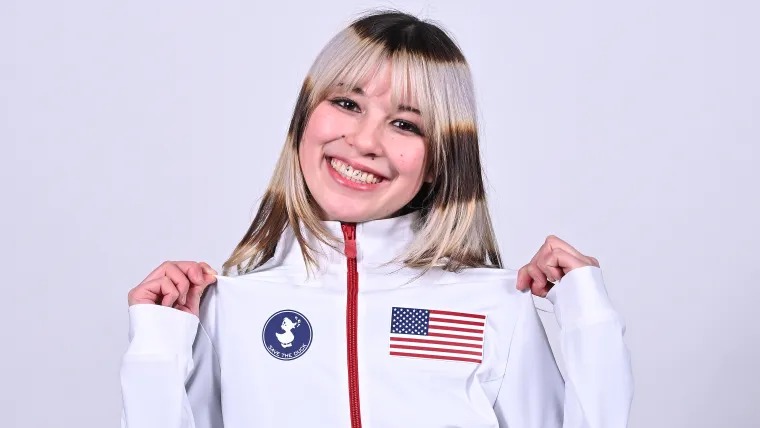
Milan–Cortina is drawing the strongest Winter Olympics TV audience in years, turning Alysa Liu’s third‑place short program into a breakout moment in front of tens of millions of viewers.
When Alysa Liu stepped onto Olympic ice for the women’s short program in Milan, the stakes already felt enormous. She was returning to the biggest stage in her sport, carrying U.S. medal hopes and skating a program built less on perfection than on freedom, joy, and the rediscovered love of skating that brought her back to competition in the first place. By the time she left the ice, sitting third heading into the free skate, it was clear she had delivered one of the emotional high points of these Winter Games.
What makes this moment even bigger is how many people are watching it unfold in real time. NBCUniversal says its Milan–Cortina coverage is drawing the largest Winter Olympics audience in years across broadcast, cable, and streaming, with nightly coverage reaching into the tens of millions of viewers. In other words, Alysa Liu’s comeback is not happening in a niche late‑night window — it’s happening at the heart of a resurgent Olympic audience that is tuning back in.
After years of questions about whether casual fans would return to the Winter Games, Milan has answered loudly. A friendlier European time zone, a strong promotional push, and easy streaming access have helped turn these Olympics into appointment viewing again for families across the U.S. That means fans who haven’t watched figure skating since the last big American star are suddenly meeting Alysa Liu for the first time — and discovering a story that feels both classic and new.
For figure skating, that kind of visibility matters. A third‑place short program in front of a modest audience is a good result; a third‑place short program in front of a massive prime‑time audience can shift the momentum of an entire Olympic cycle. It’s the difference between a result fans read about in the morning and a program they remember, replay, and share. Somewhere tonight, a young skater lacing up rental boots at a public session is seeing Alysa on TV and thinking, “Maybe that could be me.”
Liu’s journey makes this even more powerful. She has already lived one full career arc: prodigy, national champion, Olympian, and then a teenager stepping away from competition on her own terms. Now she’s back as a 20‑year‑old with a different relationship to the sport and to herself, skating programs that feel less like obligations and more like statements of who she is. The cameras may catch the jumps and spins, but what millions of viewers are responding to is the sense of a young woman fully present on the ice again.
As the free skate approaches, the math is simple: she is close enough to the top that a clean, courageous long program could put her on the podium, and the audience waiting to see whether she can do it is only growing. Whether she leaves Milan with a medal or not, Alysa Liu has already turned these Olympics into a shared moment — for longtime skating fans, for new viewers discovering her story in prime time, and for every kid watching at home who suddenly feels a little less far from the ice.
However Thursday’s free skate ends, one thing is certain: the world is watching Alysa Liu again. And this time, she gets to decide what that moment means.